The Clean Energy Reckoning: Solar Dominance, the Green Hydrogen Gamble, and the New Geopolitics of Power
- 1.1. The Solar Juggernaut: How Wright’s Law Crushed Fossil Economics
- 2.2. Green Hydrogen: Clean Fuel Miracle or Capital Sinkhole?
- 3.3. The New Energy Cartels: From Petrostates to Electro-States
- 4.4. Head-to-Head: Clean Energy Pillars
- 5.5. The Pragmatic Playbook: Everyday Energy-Saving Hacks for the Transition
- 6.6. The Bottom Line: Moving Beyond Green Idealism
Deep in the expanse of the Moroccan desert stands Noor Ouarzazate, a sprawling solar complex visible from low Earth orbit. Hundreds of curved mirrors track the sun across the Sahara, focusing blinding beams of light onto central towers that glow like terrestrial stars. It is an awe-inspiring vision of a carbon-free civilization—yet just thousands of miles away, coal-fired generators across developing industrial hubs continue to hum at peak capacity.
This paradox captures the current era of green technology. The narrative that transitioning away from fossil fuels is purely an environmental crusade led by virtuous activists has vanished. In its place sits a ruthless, multi-trillion-dollar economic battlefield where sovereign wealth funds, industrial giants, and state planners scramble for control over the 21st century's power infrastructure.
We are living through the steepest transformation of human capital and physical machinery since the Industrial Revolution. As governments and private enterprises spend over $1.7 trillion annually on decarbonization, understanding the divide between technological breakthroughs and greenwashing propaganda is vital—not just for global policymakers, but for any citizen managing a household budget in an era of wild energy volatility.
1. The Solar Juggernaut: How Wright’s Law Crushed Fossil Economics
For decades, solar panels were dismissed by legacy energy titans as niche, fragile toys suited only for satellites and remote off-grid cabins. That narrative is definitively dead.
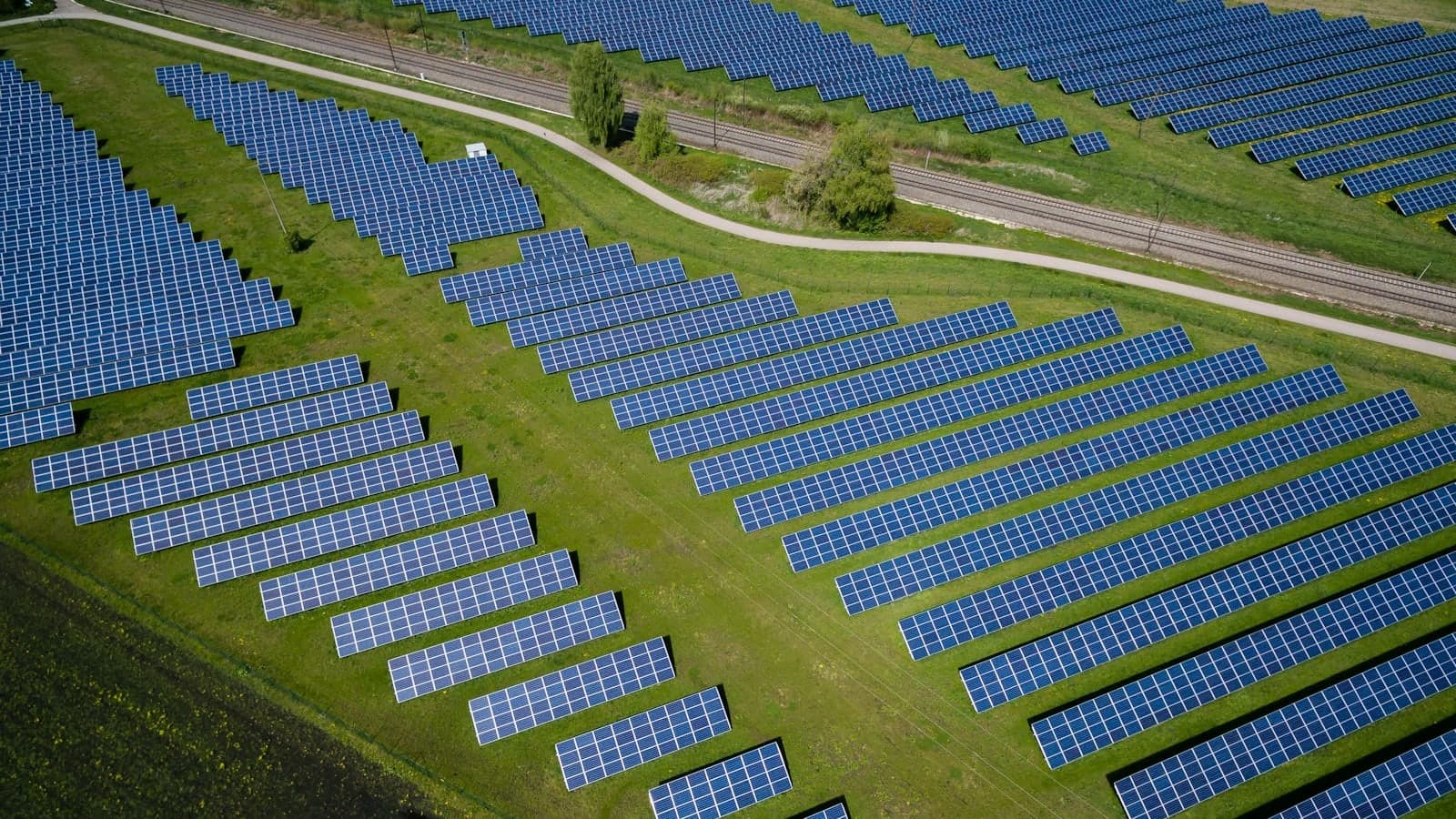
Over the past decade, solar photovoltaic (PV) module costs plunged by nearly 90%, driven by Wright’s Law: the technological principle dictating that for every cumulative doubling of production volume, manufacturing costs drop at a predictable, compounding rate. Today, ultra-scale solar installations routinely generate electricity at a Levelized Cost of Energy (LCOE) below $0.03 per kilowatt-hour, outcompeting even the cheapest amortized natural gas turbines.
The Manufacturing Chokepoint
While solar has democratized generation, it has radically centralized manufacturing:
- Monopolistic Concentration: Over 75% of global polysilicon, ingots, and wafers originate inside a single nation: China.
- Geopolitical Re-Shoring: The United States' Inflation Reduction Act (IRA) and the European Union’s Net-Zero Industry Act represent massive subsidy gambits attempting to rebuild domestic solar wafer fabrication before regional supply chains become entirely dependent on foreign exports.
- Efficiency Frontiers: Commercial silicon cells are rapidly approaching their theoretical Shockley-Queisser physical limit (around 33%). In response, researchers are engineering commercial tandem perovskite-on-silicon cells, which capture both blue and red spectrums to unlock efficiency rates north of 30% on standard residential rooftops.
2. Green Hydrogen: Clean Fuel Miracle or Capital Sinkhole?
If solar power is the undisputed winner of baseline electricity generation, green hydrogen energy represents the energy transition’s most contentious frontier.
Unlike fossil-extracted "grey" hydrogen (derived from methane via steam reformation, emitting vast volumes of carbon dioxide), green hydrogen is generated via electrolysis: splitting pure water into hydrogen and oxygen utilizing surplus zero-emission electricity from wind or solar arrays.
The Thermodynamic Penalty
The physics of green hydrogen present an undeniable obstacle: the round-trip efficiency penalty.
- You generate renewable electricity.
- You lose roughly 25% to 30% of that energy during the electrolysis process.
- Compressing the gas to 700 bar or cryogenically chilling it to minus 253 degrees Celsius eats another 10% to 15% of the total energy.
- Burning it in a turbine or passing it back through a fuel cell incurs an additional conversion loss.
Using green hydrogen to heat private homes or power passenger cars is, economically speaking, wildly inefficient compared to direct electrification via heat pumps and battery electric vehicles (EVs).
Where Hydrogen Actually Wins
Green hydrogen is not built for your garage; it is engineered to save the foundational pillars of modern civilization that batteries simply cannot touch:
- Green Steel: Replacing coking coal with hydrogen in direct-reduced iron (DRI) furnaces eliminates roughly 7% of global industrial emissions.
- Maritime Shipping: Massive long-haul container vessels cannot carry the weight of current battery chemistry. Ammonia (synthesized from green hydrogen and nitrogen) is rapidly emerging as the premier zero-emission bunker fuel.
- Long-Duration Grid Storage: While lithium batteries struggle beyond 4 to 8 hours of discharge, underground salt caverns filled with compressed hydrogen can store gigawatt-hours of seasonal reserves to keep grids alive through freezing, windless winters.
3. The New Energy Cartels: From Petrostates to Electro-States
The fossil fuel era established geopolitical spheres governed by OPEC and pipeline control. The clean energy transition does not eliminate geopolitical leverage; it reallocates it toward critical minerals and refining capacity.
An electric vehicle requires six times the mineral inputs of a conventional internal combustion vehicle. An offshore wind plant demands nine times more mineral resources than a comparable gas-fired turbine. The world is pivoting from a resource-depletion paradigm (drilling for oil) to a materials-refining paradigm:
- Copper: The neural pathway of electrification. Global demand is on track to outstrip mined supply by nearly 20% by 2035.
- Lithium and Nickel: The bedrock of transport chemistry, currently subject to immense price volatility and localized supply concentration across South America, Australia, and Indonesia.
- Rare Earth Elements (Neodymium, Dysprosium): Essential for the permanent magnets inside high-efficiency wind turbine nacelles and EV drivetrains.
Nations that construct processing refineries and maintain resilient domestic recycling infrastructure will establish themselves as the new "electro-states," wielding the precise leverage that petro-monarchies held throughout the 20th century.
4. Head-to-Head: Clean Energy Pillars
To separate marketing hype from deployment realities, examine the operational parameters of today's primary clean energy solutions:
| Technology | Current LCOE ($/MWh) | Primary Strength | Critical Bottleneck | Ideal Economic Application |
|---|---|---|---|---|
| Utility-Scale Solar PV | $25 - $45 | Lowest generation cost in history | Intermittency & grid curtailment | Daytime peak shaving & grid baseload |
| Green Hydrogen | $120 - $220 | Massive energy density for heavy industry | Thermodynamic round-trip loss (up to 60%) | Steelmaking, maritime freight, seasonal storage |
| Offshore Wind | $60 - $110 | High capacity factors; runs day & night | Severe supply-chain & installation bottlenecks | Coastal manufacturing centers & industrial clusters |
| Lithium-Iron Phosphate (LFP) | $100 - $160 | Rapid response (milliseconds); declining cost | 4-to-8 hour discharge ceiling; mineral extraction | Intra-day grid stabilization & transport |
5. The Pragmatic Playbook: Everyday Energy-Saving Hacks for the Transition
While nation-states battle over offshore wind concessions and lithium concessions, the macroeconomic shift directly hits consumers through escalating, volatile retail electricity tariffs.
Adapting to the clean energy transition requires approaching personal utility consumption not as a passive bill, but as an active financial arbitrage opportunity. Here is how modern households can adapt immediately:
Exploit Dynamic Time-of-Use (TOU) Rates
Utility operators frequently struggle with midday solar surges (the infamous "Duck Curve"), resulting in near-zero or negative wholesale power prices during sun-drenched hours.
- Switch to an agile, dynamic-rate utility plan.
- Automate heavy appliances (dishwashers, laundry cycles, EV chargers) to cycle on between 11:00 AM and 3:00 PM, bypassing expensive peak evening rates (5:00 PM – 9:00 PM).
Deploy "Balcony Solar" and Micro-Inverters
Urban dwellers no longer need to own a sprawling detached roof to harness the solar energy revolution. Plug-in solar kits mounted to balcony railings or patio spaces connect directly to standard home wall outlets via smart micro-inverters, covering an apartment's standby electrical load ("phantom power") and shaving 10% to 20% off base utility costs.
Prioritize Thermal Mass Over Air Conditioning
Heating and cooling comprise over 50% of residential energy consumption. Invest in smart thermostat automation that "pre-cools" or "pre-heats" your living environment during midday solar surpluses, allowing the thermal mass of your home's walls and floors to coast through peak evening cost spikes without drawing expensive grid power.
6. The Bottom Line: Moving Beyond Green Idealism
The clean energy transition is neither an effortless technological utopia nor an environmentalist pipe dream. It is a messy, friction-heavy, capital-intensive restructuring of the global physical economy.
Solar has won the price war for raw generation. Batteries have taken the light transport sector. Green hydrogen stands ready to rewrite the rules of heavy industry—if its production infrastructure can conquer daunting physics hurdles. Those who understand these fundamental mechanics will navigate the next century of volatile economics with clear advantages, while those waiting for an effortless solution will find themselves footing the bill.
Frequently Asked Questions
Direct answers to common questions regarding this topic.
Why is green hydrogen so expensive compared to traditional fossil fuels?▼
Green hydrogen requires significant zero-carbon electricity to run electrolyzers that split water. Because the process currently loses 25% to 30% of input energy during electrolysis, plus additional energy for compression and transit, the production cost remains around $4 to $6 per kilogram, compared to $1.50 per kilogram for fossil-derived grey hydrogen. Expanding production scale and cheaper surplus solar are required to reach cost parity.
Can solar power completely replace fossil fuels on the electrical grid?▼
Solar alone cannot sustain the grid because it is an intermittent energy source that stops producing at night and drops during cloudy conditions. To eliminate fossil fuels entirely, solar PV must be paired with massive energy storage systems (such as lithium-iron phosphate batteries and pumped hydro), long-distance high-voltage direct current (HVDC) transmission lines, and firm clean power sources like nuclear or geothermal.
Are solar panels truly environmentally clean if they require rare materials to produce?▼
While the extraction and refining of silicon, silver, and aluminum carry environmental footprints, lifecycle analysis demonstrates that standard solar panels offset the emissions and energy used to manufacture them within 1 to 3 years of operation. Over their 25-to-30-year operational lifespan, they generate clean electricity with zero emissions, and modern closed-loop recycling plants are steadily improving material recovery rates.
What is the most cost-effective green tech upgrade for an average homeowner?▼
The highest return on investment typically comes from replacing legacy resistance heating or gas furnaces with high-efficiency heat pumps, paired with a programmable smart thermostat. For renters and urban apartment dwellers, plug-and-play balcony solar units and smart plugs that automate appliance usage around time-of-use tariffs yield the fastest financial payback.
Related Insights & Trends
Discover more articles from our modern technology editorial hub.