Autonomous Era: How Generative AI & Agents Are Redefining Remote Work and Careers
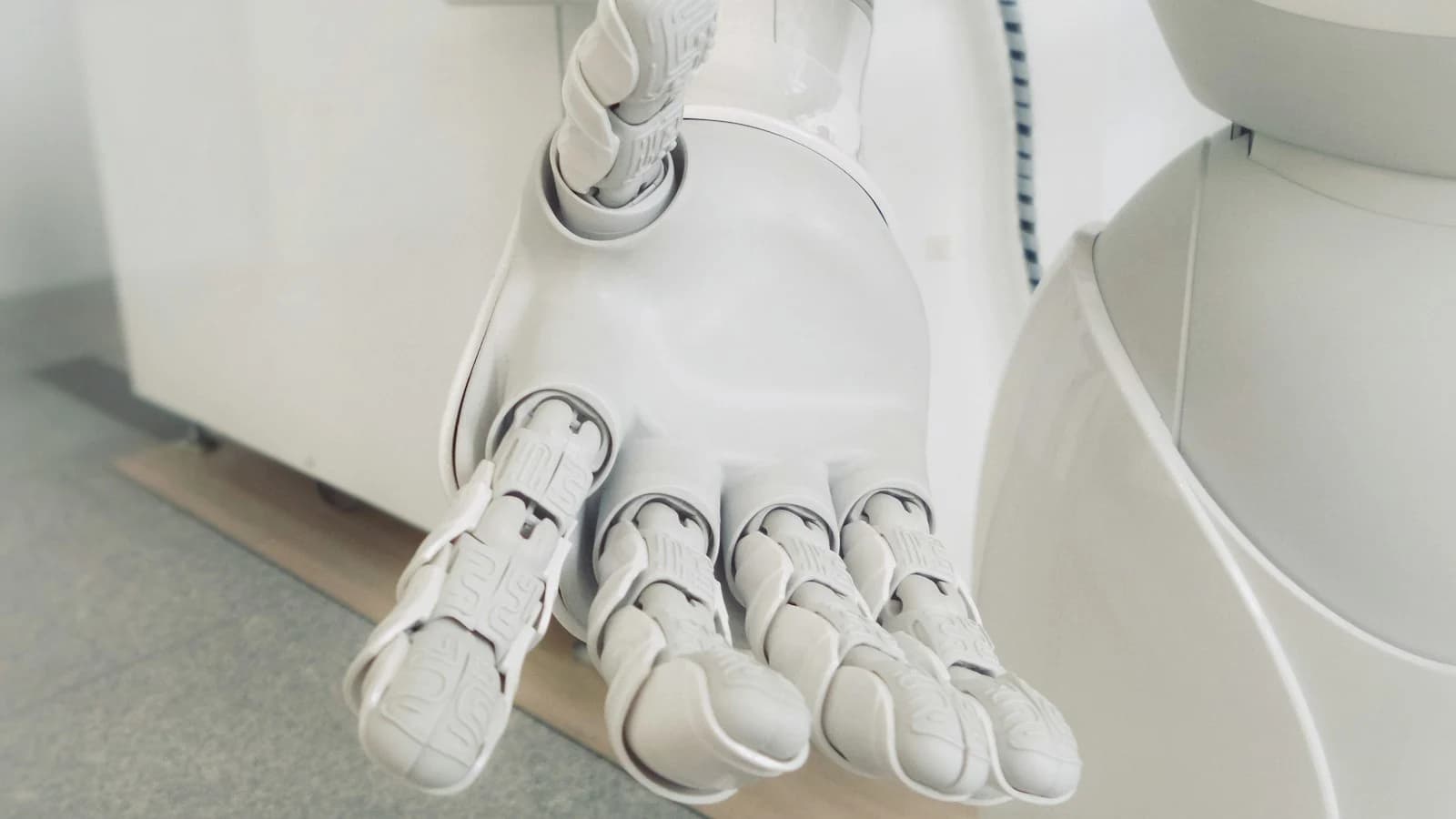
Autonomous Era: How Generative AI & Agents Are Redefining Remote Work and Careers
The office as a physical anchor is practically ancient history. We have entered the threshold of 2026, where the modern digital workspace is no longer defined by Slack notifications, endless video calls, or manual prompt engineering. Instead, the paradigm has shifted toward orchestration. We now manage ecosystems of autonomous AI agents that handle multi-step workflows, write production-ready code while we sleep, and negotiate contracts on our behalf.
For remote workers, digital nomads, and independent consultants, the generative ai impact is both liberating and disruptive. The race is no longer about who can type faster or generate a basic blog post using a consumer chat interface. Success now belongs to those who master the art of architectural thinking, system design, and prompt choreography.
The Rise of Autonomous Agents in the Distributed Workforce
For the past few years, artificial intelligence acted primarily as an advanced autocomplete or a creative sounding board. You asked a question; it gave an answer. You copy-pasted the text, edited it, and moved on.
Today, autonomous ai agents have completely broken that transactional loop. Built on advanced recursive reasoning frameworks, modern agents operate asynchronously. You give an agent a high-level objective—such as "audit our cloud infrastructure, fix the security vulnerabilities, deploy a staging environment, and write the release notes"—and it executes the entire chain of tasks across multiple software tools without human hand-holding.
What This Means for Remote Professionals
- Shift From Task Execution to Supervision: Remote workers are transforming from individual contributors into virtual managers. Your primary value is your ability to define clear constraints, evaluate machine-generated outputs, and maintain architectural integrity.
- Asynchronous Scaling: Freelancers can now take on the operational capacity of a five-person agency. By deploying localized ai tools for productivity, a solo developer or designer can manage complex, enterprise-grade deliverables effortlessly.
- Hyper-Personalized Workspaces: Hardware has evolved in tandem with software. Professionals rely on high-performance edge computing devices, neural processing unit (NPU)-enabled laptops, and immersive multi-monitor setups to monitor background agent swarms in real time.
Comparing the Work Paradigms: 2024 vs. 2026
The transition from standard AI assistance to autonomous execution highlights how radically our daily routines have changed.
| Feature | Traditional Remote Work (2024) | Autonomous Agent Era (2026) |
|---|---|---|
| Primary Tooling | Chat interfaces, manual coding, copy-pasting | Multi-agent swarms, API orchestration, automated pipelines |
| Workflow Bottleneck | Human typing speed and manual review | Defining clear objectives and evaluating edge cases |
| Freelance Scale | Capped by billable hours | Scaled infinitely via automated micro-services |
| Daily Focus | Drafting emails, writing baseline code, formatting | Strategic planning, client relations, architecture design |
Freelancing with AI: Building a One-Person Unicorn
If you are freelancing with ai in 2026, your business model looks vastly different from traditional gig economy platforms. The commoditization of basic writing, translation, and entry-level coding means that low-skill freelance arbitrage has vanished.
Instead, elite independent professionals operate as "system architects." A freelance marketer no longer spends hours scheduling social media posts or drafting routine copy. They deploy a custom-trained agentic pipeline that analyzes real-time market sentiment, generates hyper-targeted campaigns, A/B tests variations autonomously, and reports conversion metrics straight to a dashboard.
Essential Setup for the AI-Powered Freelancer
- Agent Orchestration Platforms: Utilize software that allows you to chain multiple specialized models (e.g., combining reasoning models with deterministic code interpreters).
- Robust Security Protocols: Because agents handle sensitive client data and credentials, implementing zero-trust security layers and local vector databases is non-negotiable.
- Ergonomic & Mobile Hardware: Working remotely requires hardware that won't stutter under heavy local model inference and multi-tasking loads. Professionals rely heavily on ergonomic vertical mice, noise-canceling headsets, and ultra-portable mechanical keyboards.
Navigating the Future of Tech Jobs
The future of tech jobs belongs to generalist-specialists—people with deep domain expertise who understand how to leverage automation across multiple disciplines. Coding is no longer just about syntax; it is about prompt architecture, logic validation, and system integration.
As junior coding tasks become entirely automated, career entry points have shifted. Companies now look for junior talent that demonstrates exceptional critical thinking, ethical AI governance, and system-level debugging skills. Universities and bootcamp curriculums have pivoted away from teaching raw syntax toward teaching agent management and workflow automation.
Actionable Framework: How to Future-Proof Your Career Today
- Audit Your Daily Workflow: List every repetitive task you perform over a two-week period. If an autonomous agent can handle 80% of it, build or adopt a tool to automate it immediately.
- Move Up the Value Chain: Stop selling execution; start selling outcomes, creative strategy, and problem-solving frameworks.
- Invest in Continuous Skill Stacking: Learn the basics of API integrations, vector embeddings, and prompt governance to remain indispensable in a shifting labor market.
By embracing autonomous agents rather than fearing them, remote workers and freelancers can unlock unprecedented levels of creativity, financial freedom, and professional fulfillment in 2026 and beyond.
Frequently Asked Questions
Direct answers to common questions regarding this topic.
What is the difference between generative AI and autonomous agents?▼
Generative AI models respond to direct human prompts to create text, code, or images. Autonomous agents take high-level goals, break them down into multi-step tasks, use external tools, and execute workflows asynchronously without continuous human intervention.
How are autonomous agents changing remote work?▼
Autonomous agents act as virtual assistants or team members, handling repetitive digital tasks, managing data pipelines, and allowing remote workers to focus entirely on high-level strategy, creative direction, and complex problem-solving.
Will AI eliminate freelance jobs?▼
AI eliminates low-skill, repetitive freelance tasks like basic data entry or routine copywriting. However, it empowers skilled freelancers to scale their operations, acting as a force multiplier that allows a single person to run an agency-level workload.
How can I prepare for the future of tech jobs in an AI-driven market?▼
Focus on developing deep domain expertise, system architecture skills, and prompt orchestration. Learn how to manage AI agents, ensure data security, and translate complex business goals into clear technical parameters.
Related Insights & Trends
Discover more articles from our modern technology editorial hub.